
Skip to content
Ask ITARR

A visual identity you can keep using

Our own visual identity shows how AI can produce alternatives while a person sets the direction and makes the choices. You can explore the journey and seven brand sheets.

Explore how form, rule and application fit together.

Choose a perspective and follow the route.

From mark to everyday use

The K1 markThe K1 mark
AaInter · Schibsted
Existing sample document
Open the visual identity journey

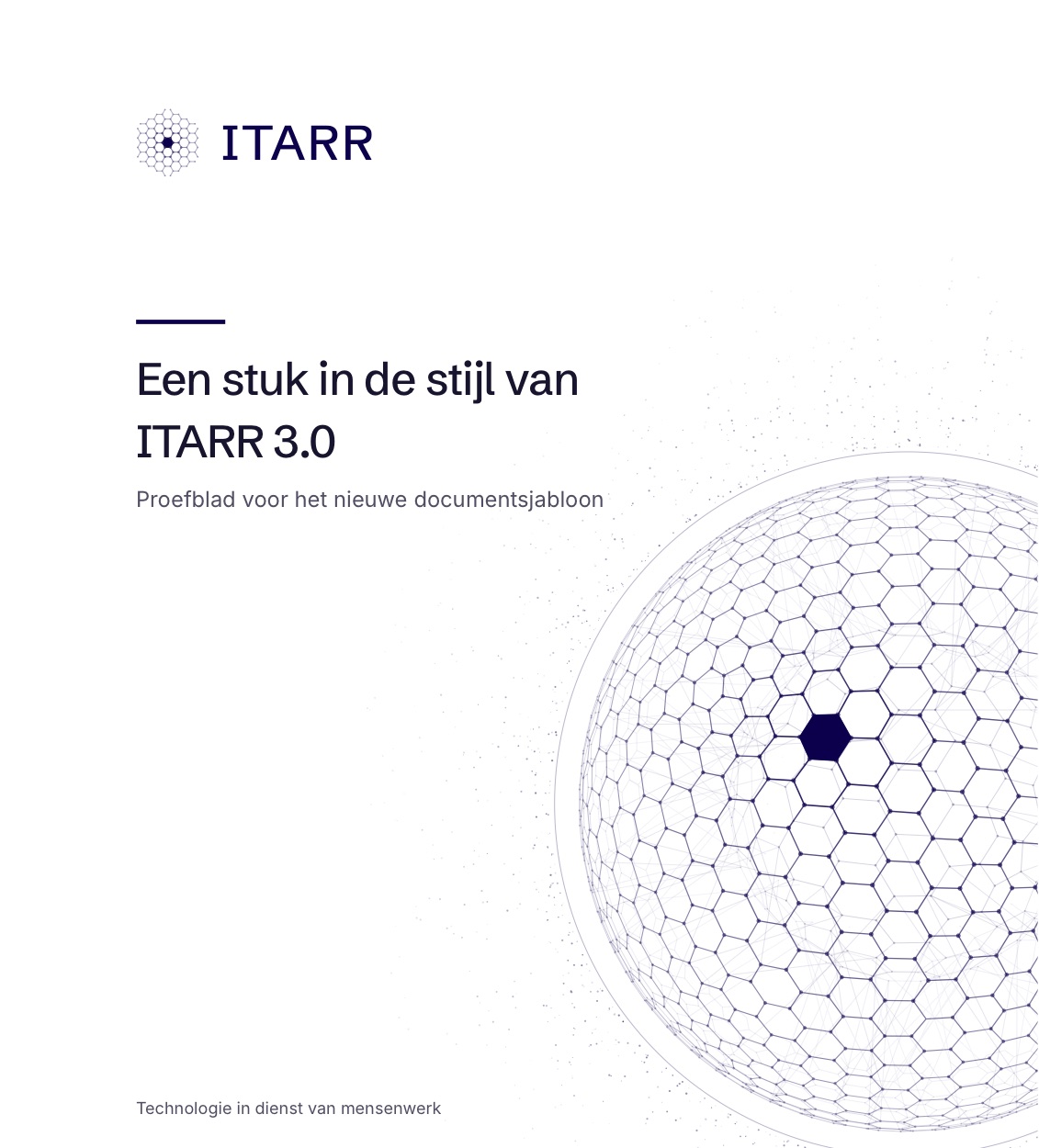
The actual document cover

The existing sample cover brings mark, typography, colour and layout together. Follow the journey and explore the seven brand sheets.

Read more
  1. FormThe existing hexagonal mark with one filled cell is the starting point for the visual identity.
  2. RuleDefined colours and typefaces connect the mark to applications for the site and documents.
  3. ApplicationThe existing sample cover brings mark, typography, colour and layout together. Follow the journey and explore the seven brand sheets.

An explanatory diagram of our working method.

The identity must work in everyday use

A logo is only a beginning. Colours, typography and layout need to work together on a website, in a document and on a small screen. The reasons behind a choice should remain clear too.

For our own visual identity, we explored both the design and its use. The examples on this site show the result and how we reached it.

What you can explore here

The identity consists of a hexagonal mark with one filled cell, defined colours, typefaces and applications for the website and documents. The mark also has a moving version.

The visual identity journey brings choices and images together. Seven brand sheets describe parts of the identity and show how they are used.

AI proposed, a person chose

AI colleagues produced alternatives and developed the chosen forms. A person set the direction, compared proposals and rejected what did not fit.

The value is not only in producing many images. It is also in retaining decisions and carrying them consistently into the finished work.

From a design to usable rules

A useful handover describes which forms and files to use, how colours and typefaces work together and where the boundaries lie. Examples make those rules easier to apply.

For a new assignment, we agree beforehand which applications are needed and which files, guidance and checks form part of the delivery.

What this example demonstrates

This is our own work: the visual identity is used on this site and in our documents. It shows how design, decisions and implementation can stay connected.

It does not measure time savings or results at other organisations. The original work report describes the position on 19 October 2026; the journey and brand sheets became available afterwards.

Start with one application

Want to explore what this approach could mean for your brand? Start with one application that is not working well: a page, a report or a document you use often.

We discuss what should remain recognisable, what needs to change and how you will assess the initial design. Scope and handover follow from that assignment.

Work report dated 19 October 2026

Back to Build

The journey to our own visual identity

From a first document style in August to a brand of our own in October, made with AI colleagues and chosen by a person.

Proven

The question

Commissioning a visual identity can take weeks and a sizeable budget. Then it still has to work everywhere: on your website, in proposals and in reports. The choices made along the way often get lost, along with the reasons behind them.

What we built

Our own visual identity, made with AI colleagues:

  • a hexagonal symbol with one filled cell, which can also move;
  • a fixed colour palette and two typefaces;
  • templates that format documents automatically, in the same style as the website.

And the journey behind it, under construction: a route from the first document style to the symbol, showing the choice and image at every step. At the end comes the brand book: the rules, examples and how to use them.

What AI did and what a person signed off

The AI colleagues drew dozens of versions of the symbol and lettering across ten rounds. They built the moving symbol and the templates, and they check pages and documents for typography and layout.

A person guided each round: choosing, removing what did not fit, asking for alternatives and approving the result. The owner decided to remove one typeface everywhere. The automated checks have rejected it ever since. That is a way to stay in control too.

What it achieved

Our own measurements, not representative.

  • 9 August 2026: a first document style.
  • 27 August: a proposal for a symbol in four directions.
  • The weekend of 16 to 18 October: the pace picked up, with the new symbol, lettering, colours and templates for ITARR 3.0.
  • 19 October: a document cover and a distinct sharing image for each page.
  • Almost 600 images of the journey, kept in our archive.
  • The website and Lab are checked for the agreed typefaces after every change. That check is still to come for our document templates.

What it could do for you

The same approach could work for you: a quick process with plenty of alternatives, while you make the choices. You receive templates that give documents a consistent appearance, checks that help keep it that way, and eventually a brand book containing the whole journey. Anyone working with your brand later can see both the rules and their reasons.

Where it stands

Proven in our own work: this website and our documents use the visual identity. The journey and brand book are under construction. We have not done this for a client yet.

Read further

The journey and brand book are under construction.

Work done 18 October 2026 · Written 19 October 2026

Terms in this text

Here is what we mean by these terms. These explanations belong to the text on this page.

AI colleague
Software that helps carry out a defined part of the work. An AI colleague is not a human decision-maker: we agree what the software may do and when a person decides.
Meaning in this text

Meaning in this text

Ask ITARR

Start with a question or choose a direction.

    Try a question

    Based on public ITARR sources. Open a source to read more.